…this started as book research, which is how I end up down most rabbit holes…
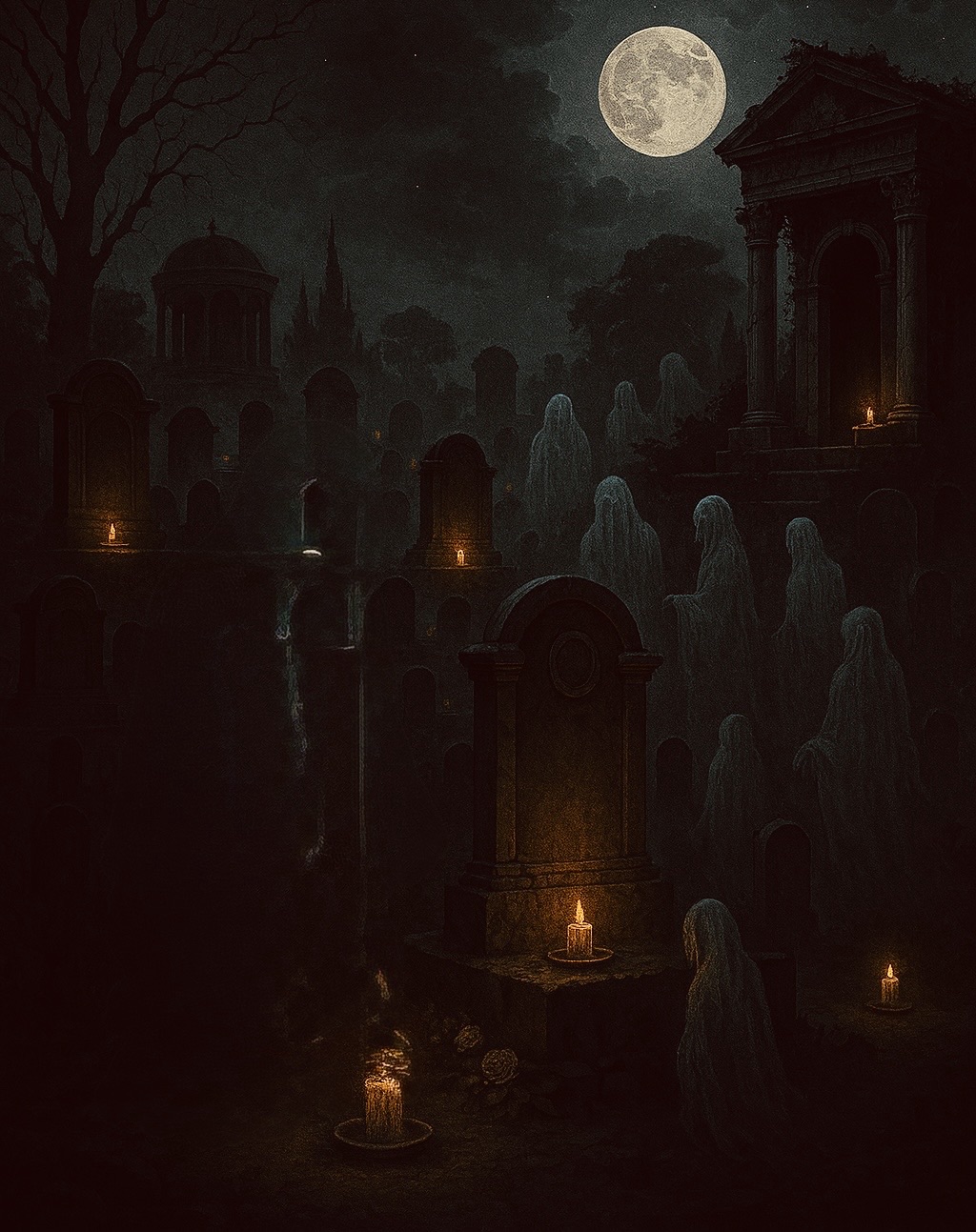
The 21st of February marks the end of an eight-day Roman festival known as Parentalia, a time devoted to honouring the dead. The final day; today, is called Feralia, and it’s when things… wrapped up.
For eight days, Roman families visited graves and tombs, brought food, shared meals, and honoured ancestors who’d passed on. It all sounds rather tender and respectful, and it was. But let’s not mistake that gentleness for ease.
The Romans were deeply wary of the dead.
They believed this was a time when the shades of the departed wandered freely among the living. Not in a fun, popping-round-for-tea way, more in a please don’t follow me home way. Parentalia acknowledged them, honoured them, kept them sweet.
Feralia, though? Feralia was about closing the gate.
This wasn’t a festival of welcoming. It was the ritual moment when the dead were encouraged, politely but firmly, to return to where they belonged and stay there. The wandering stopped. The spirits hovered over their graves once more. The living reclaimed their streets.
Very Roman. Very practical.
Details of the rites are a little hazy, but offerings of bread, wine, salt, and yes beans, are mentioned in various sources. Beans crop up suspiciously often in Roman death rituals, which says more about Roman ideas of the soul than I’m qualified to unpack here. (Make of that what you will.)
It’s tempting to compare Feralia to Halloween, though the better comparison is Samhain, the Celtic festival marking the thinning of the veil at the end of October. Like Feralia, Samhain acknowledged that the dead were close. Like Feralia, it involved protection, boundaries, and ritual.
But while Samhain leaned into liminality; honouring, warding, negotiating. Feralia feels more like a civilised clearing of the throat.
Thank you for visiting. It’s been lovely. But back you go.
Different cultures. Same human concern.
Every society, in its own way, has had to work out how to live with the idea of death — and how to stop it spilling into everyday life. The Roman approach was respectful, anxious, symbolic, and faintly no-nonsense. Which, honestly, tracks like a straight road.
Ovid tells a story that during one Feralia, when the rites were neglected, restless spirits rose and wandered, causing chaos until the proper rituals were restored. It’s a classic reminder of the Roman belief that harmony between the living and the dead required attention and reciprocity.
I suppose it’s interesting now because Feralia sits at that late‑winter threshold and Samhain sits at the beginning, they span the first days of darkness and the last, where the world feels thin-skinned and transitional.
I first fell down the Feralia rabbit hole while researching for a story, and it stayed with me; that mix of honour and fear, reverence and relief. And who knows… it may yet find its way into a book.
Happy Feralia.
Jo x


 Welcome to My Magnolia Soul.
Thoughts and comments welcome